- AfCFTA could underperform if implemented as a goods-only trade agreement
- Youth mobility and protection are critical to Africa’s economic integration
- Services, digital, and creative industries are the fastest-growing global sectors
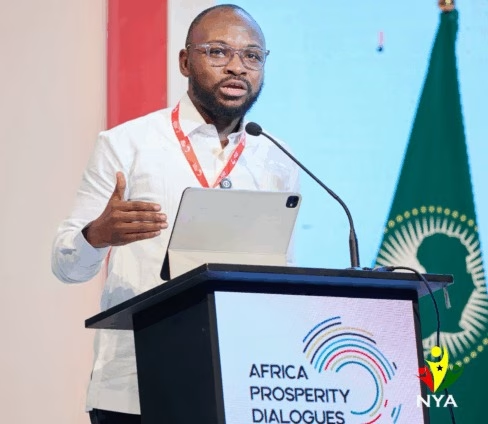
The Chief Executive Officer of the National Youth Authority (NYA), Osman Abdulai Ayariga, has cautioned that the African Continental Free Trade Area (AfCFTA) risks failing to deliver its full potential if it is treated solely as a goods-based agreement without addressing the movement and protection of Africa’s young talent.
Speaking at the Africa Prosperity Dialogues under the theme “Africa Without Borders: Youth, Creativity, and Power in an Integrated Africa,” Mr. Ayariga underscored the need for Africa’s integration efforts to place young people, creativity, and the services sector at the centre.
Although AfCFTA has established a unified market of more than 1.4 billion people with a combined economic value exceeding US$3 trillion, he noted that economic systems are ultimately driven by people rather than goods alone.
He warned that limiting AfCFTA to trade in goods would structurally disadvantage Africa’s youth, stressing that the world’s fastest-growing economic sectors—services, digital production, and the creative industries—depend on skills, mobility, and innovation. Despite this, Africa accounts for less than one per cent of the global creative economy, a shortfall he attributed to policy constraints rather than a lack of talent.
Referencing Nigeria’s film industry, Mr. Ayariga highlighted that global streaming platforms invested approximately US$40 million in Nollywood between 2016 and 2022, enabling African narratives to reach global audiences. He noted that culture has moved beyond soft power to become a significant economic and diplomatic asset.
Mr. Ayariga called on African governments to make deliberate investments in cultural diplomacy or risk having Africa’s identity shaped by external forces. He further urged decisive political action, including cross-border recognition of skills, labour-responsive mobility policies, and a structured free-movement system that allows Africans to live, work, and create across the continent with dignity.
He concluded by stating that while Africa’s youth are already unrestricted in vision and ambition, policy frameworks have yet to catch up with this reality.