For 32‑year‑old market trader Edna Ayittey, the memory is still painful. Two men in crisp white shirts came to her stall in Accra, showed what looked like official paperwork, and accused her of violating licensing rules. They demanded cash immediately.
Afraid of losing her stall, Ayittey handed over her day’s takings in exchange for what appeared to be a stamped receipt. A few weeks later, she discovered the receipt was fake.
“We thought we were paying our taxes to support the country,” she told The Fourth Estate. “But it turned out we were only feeding somebody’s pocket.”
Her story isn’t unusual. Between late 2022 and 2023, dozens of hawkers and small shop owners around Accra were tricked by a network posing as municipal revenue collectors. Sometimes guarded by armed men, these impostors collected cash, handed over forged receipts, then vanished.
What may appear to be petty fraud is in fact a systemic leak. Traders, auditors, and officials interviewed say this illicit scheme has existed quietly for years.
During a recent visit to Agbogbloshie market, amid the usual din of tomato sellers, smoky fish stalls, and porters carrying heavy loads, one trader whispered in confidence: “Even after years of warnings, these scams aren’t going away—they come back to the markets week after week.”
The Accra Metropolitan Assembly (AMA) acknowledged as far back as 2018 that fake tickets were being circulated, after vendors brought forged receipts to radio stations.
In one notable case, AMA’s internal auditors found two revenue collectors using illicit receipt booklets with identical serial numbers at two different markets. They pocketed GHC 500 before being arrested. A market woman in Madina remarked: “If just GHC500 was taken by one scammer, many such incidents over months could cost thousands of cedis.”
Many victims stay silent, intimidated or afraid their goods will be confiscated.
At Kaneshie, a food vendor serving stew to a lunchtime crowd spoke quietly: “Just last month, I lost money to men who said they were from the Assembly. We are scared to talk.”
In Dome, where rainwater floods alleys and traders sheltered under tarpaulins, one stallholder recalled paying GHC 30 and receiving only a blank piece of paper—no official receipt.
“I paid because I didn’t want trouble. But it never ends.”
Officials maintain they do not tolerate unauthorized levies. The Accra Metropolitan Assembly has repeatedly urged the public to report impostors to local offices or the police.
“This is a significant issue, probably underreported, because motivation to pay taxes is low… the compliance framework, especially at the local level, is complex,” Selorm Branttie of IMANI Africa told The Fourth Estate.
Why many stay silent
The Ghana Union of Traders Association (GUTA) says they haven’t received mass complaints—suggesting the scheme targets the most vulnerable: informal market operators, which include street hawkers, food vendors, stallholders outside formal associations.
“These traders often lack digital literacy, little access to legal protection, and fear confronting men who claim state authority,” explained Joseph Obeng, president of GUTA.
Three factors enable the fraud: reliance on cash transactions, ease of forging official paperwork, and gaps in regulation.
Until recently, many municipal collections were paper‑based. That made it possible to demand payments into private mobile‑money accounts or provide counterfeit tickets.
Forgery is easier than many realize. In past AMA investigations, fake receipts used authentic serial numbers, making them hard to spot. Leaked or counterfeited identity badges and official stamps have also been recorded.
While internal checks exist—field collectors are meant to report to supervisors, who cross‑check receipts against cash collected—these fail when impostors lie outside official channels and when victims don’t come forward.
Law versus enforcement
Under the Local Governance Act (2016, Act 936), Ghana’s Metropolitan, Municipal and District Assemblies are authorized to collect fees, licences, and rates. The law also criminalizes issuing unauthorized receipts, with fines or imprisonment. The Revenue Administration Act (2016, Act 915) and Public Financial Management Act (2016, Act 921) similarly outlaw false receipts and require public officers to protect state revenue.
Yet prosecutions are rare. Beyond a few arrests within AMA over a decade ago, there have been no major successful legal actions against impostors, fostering a sense of impunity.
This issue reflects a deeper structural problem. Ghana loses substantial revenue each year from weak taxation in the informal sector.
A 2024 World Bank study estimates Ghana loses about 3.9% of GDP annually through tax exemptions and revenue leakages. Another study notes the informal sector employs nearly 80% of the workforce but contributes just 27% of GDP.
A 2022 survey of 2,700 informal businesses in Accra (by ICTD, WIEGO & ISSER) found high tax burdens, frequent under‑reporting, weak compliance systems, and the prevalence of scams like fake collectors.
Experts like Prof. Peter Quartey of ISSER warn these scams widen the gap between potential and actual revenue and encourage further evasion.
Attempts to fix things, and human consequences
Authorities are pushing for digital payments. The Ghana Revenue Authority (GRA) and AMA have urged people to use electronic platforms—government portals or the *222# mobile code—and have warned against cash payments.
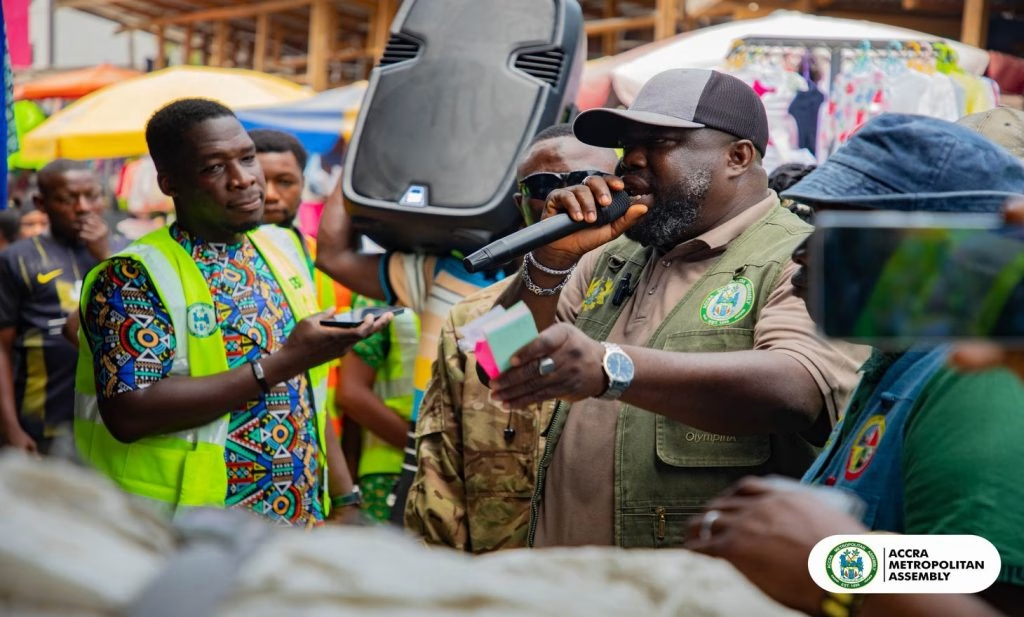
At a market enforcement exercise in Kantamanto in July 2025, Accra’s Mayor Michael Kpakpo Allotey reminded traders to insist on receipts:
“Don’t allow anyone to deceive you. Always make sure you take your receipt after paying. We have two main tickets … If anyone demands more than GHC2 or presents unfamiliar tickets, don’t pay.”
The GRA has issued multiple public alerts denying that unauthorized parties are collecting taxes, saying taxpayers should only use approved payment channels. But official statistics on revenue lost to impostors are scarce.
AMA has been distributing posters reminding vendors about the official market fee (GHC2 in Accra) and urging them to demand proper receipts.
New tools, such as QR‑coded receipts and market helplines, are being piloted—but adoption is slow.
For victims, these scams take more than just a financial toll. They erode trust. Many lose faith in the system.
“This is why people don’t trust the system,” said Ayilom, a 54‑year‑old stall owner in Dome. “You pay and pay, but nothing shows.”
For small business owners, being forced to pay can mean missing out on rent, restocking, or utility bills. In some cases, officials seize goods over suspected “penalties”—goods that are never returned.
Experts stress that public education is crucial. Understanding both the rules and how to recognize impostors can reduce victimization.
Ayittey says she would use digital payment methods—but only if she’d been shown how: “If you tell me to pay with my phone, I will if I know how. Because no one taught me.”
As Ghana works to close its fiscal gap and broaden its tax base, protecting small traders from fraud isn’t a minor issue anymore. Each fake receipt not only costs someone a day’s work—it chips away at public trust in the tax system.