Nii Kwardey Ntreh, a cultural advocate and storyteller based at the Ga Mantse Palace, has shed light on the meaning and significance of the Ga greeting ‘Oobakɛ’, which has become the centre of growing calls for inclusion on national signages.
Speaking on Joy FM’s Showbiz A-Z with Kwame Dadzie on Saturday, August 30, 2025, Nii clarified that contrary to suggestions that the term is new or informal, ‘Oobakɛ’ is an authentic and longstanding part of the Ga language.
“‘Oobakɛ’ means ‘you shall surely come’. The long vowel at the beginning signals expectation — it’s a future participle. The word reflects a welcoming spirit, especially toward visitors or foreigners,” he explained.
He described the greeting as “exoteric” — a less commonly used term outside of traditional and elder circles — though still deeply rooted in Ga heritage.
“In everyday speech, most Ga speakers would say ‘atuu’, but within royal and traditional contexts, ‘Oobakɛ’ is still very much alive,” he noted.
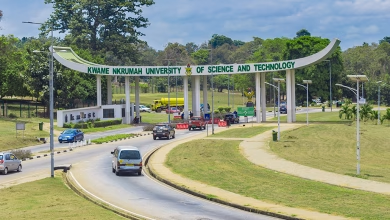
His comments follow recent public concern over the exclusion of Ga language from welcome signage at national landmarks built on Ga land, such as the Kwame Nkrumah Memorial Park. Initial signage displayed greetings in Akan and Ewe, sparking protests from Ga advocates. The signage was later updated following the backlash.
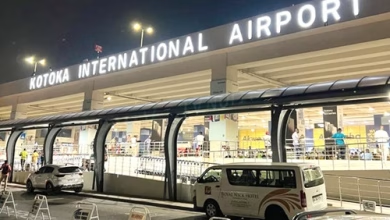
The debate has since extended to Kotoka International Airport, where campaigners have called for the popular welcome phrase ‘Akwaaba’ to be replaced or accompanied by ‘Oobakɛ’. While AI-generated images of modified airport signs have circulated online, the actual signage remains unchanged.
The issue has reignited conversations around the preservation of Ga language and identity, especially as Accra continues to grow as a diverse, multicultural capital.