- Ghana's Producer Price Inflation (PPI) fell from 24.4% in March to 18.5% in April 2025
- This marks the third consecutive monthly decline, signaling a reduction in factory gate price pressures
- The main contributors to the decline were mining, quarrying, and manufacturing sectors
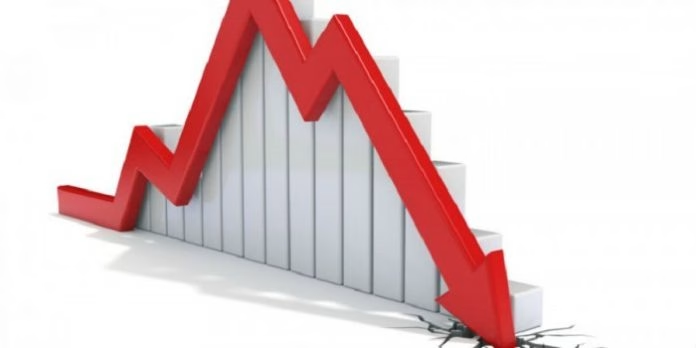
Ghana’s Producer Price Inflation (PPI) saw a significant drop in April 2025, falling to 18.5% from 24.4% in March, as per the latest figures from the Ghana Statistical Service.
This marks the third consecutive month of declining producer inflation, indicating a slowdown in price pressures at the factory gate.
The year-on-year decrease of 5.9 percentage points was mainly driven by slower price growth in two major sectors: mining and quarrying, which contributed 10.6 points to the inflation rate, and manufacturing, which added 6.9 points. Together, these sectors accounted for nearly 95% of the inflation in April.
On a month-on-month basis, producers experienced a deflation of 0.8%, indicating that average factory gate prices were lower in April compared to March. This reverses the 0.6% rise seen in March, suggesting that producers are earning less revenue per unit of goods and services sold.
The most notable decline in year-on-year inflation was observed in the mining and quarrying sector, which dropped from 35.4% in March to 24.3% in April. The manufacturing sector also saw a reduction, from 22.8% to 19.6%, while the transport and storage sector’s inflation fell from 20.4% to 16.2%.
This decrease in producer inflation could provide a boost to the broader economy. According to the Statistical Service, lower input costs for producers may eventually lead to reduced consumer prices if these savings are passed along the supply chain.
However, the report also cautions that while inflation is slowing, producers may face narrower profit margins. Businesses are advised to take advantage of the current price stability to reassess their costs, explore local sourcing, and cautiously resume expansion plans.
The Ghana Statistical Service highlighted this trend as “a window for stabilization and responsible investment,” urging policymakers and industry players to use this slowdown to foster sustainable economic growth.