- Ghana’s credit rating upgraded by Fitch from ‘Restricted Default’ to ‘B-’ with Stable Outlook
- Economic Advisor Dr. Sharif Khalid says government is not rushing back to external borrowing
- Government remains focused on long-term growth, not short-term celebration
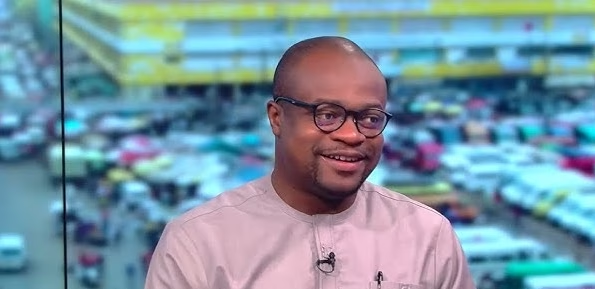
The government is taking a cautious approach to re-entering external financial markets, prioritizing domestic economic stability despite a recent upgrade in Ghana’s credit rating, according to Dr. Sharif Mahmud Khalid, Economic Policy Advisor to the Vice President.
In an interview on Joy News’ PM Express, Dr. Khalid defended the administration’s fiscal responsibility in light of Fitch Ratings’ decision to upgrade Ghana’s Long-Term Foreign-Currency Issuer Default Rating from ‘Restricted Default’ to ‘B-’ with a Stable Outlook.
“This isn’t a moment to celebrate and rush back to borrowing,” he said. “We’re staying focused. Our priority is to stabilise the domestic economy first.”
He clarified that although the rating is mainly relevant for international investors, Ghana is not yet ready to tap into external markets again.
“This rating speaks to external market confidence, but we’re not at the point of re-engaging yet,” Dr. Khalid explained. “We’re putting internal safeguards in place to ensure domestic recovery remains strong.”
He stressed that the improved rating is the result of calculated policy decisions, including the domestic debt exchange program, which gave the government fiscal breathing room.
“Those gains didn’t happen by chance,” he said. “Our debt restructuring program created space for recovery, and naturally, that influences our credit ratings.”
Dr. Khalid also pointed to structural reforms and spending controls, including a reduction in government appointments, as evidence of fiscal discipline.
“We’ve tightened spending and signaled seriousness through real action, not just words,” he noted.
He dismissed accusations of government overspending, arguing that markets react to projected budgets, not just actual expenditures.
“The financial market responds the moment a budget is presented—not necessarily when money is spent—because it already anticipates what’s coming,” he said.
He highlighted renewed efforts to rebuild financial credibility, referencing the reactivation of the Sinking Fund as a measure to ensure debt servicing reliability.
“This is about restoring trust—both locally and internationally. Fitch’s upgrade reflects that progress.”
According to Dr. Khalid, the B- rating is a clear sign of recovery: “It indicates reduced risk of default and improved confidence in our economic management.”
He concluded by affirming that despite the positive developments, the government remains committed to long-term stability rather than short-term gains.
“We’re not here to celebrate—we’re here to rebuild. Our eyes remain firmly fixed on strengthening the Ghanaian economy,” he said.