- Forex remains inaccessible via banks, despite Cedi’s appreciation
- Businesses forced into black market at higher rates
- Association urges BoG to release more forex and ensure transparency
The Importers and Exporters Association of Ghana has voiced strong concerns over ongoing difficulties in accessing foreign exchange (forex), despite the recent gains made by the Ghanaian Cedi against major global currencies.
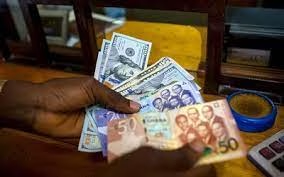
In a press release issued on Wednesday, the Association noted that businesses are still struggling to obtain forex from commercial banks, forcing many to turn to the black market, where foreign currency is more readily available—though at significantly inflated rates.
“It is troubling that even with the Cedi’s appreciation, businesses continue to face major barriers in accessing forex through the formal banking system,” the statement said.
As a result, many legitimate importers and exporters have had no choice but to rely on the black market, driving up the cost of doing business and undermining broader economic stability.
The Association referenced media reports of persistent dollar shortages and raised concerns about the growing role of informal forex dealers—commonly referred to as “Abokis”—who have been accused of hoarding and manipulating currency prices.
The group also criticized recent political commentary on the state of the Cedi, particularly remarks by the opposition New Patriotic Party (NPP), suggesting that mocking the Cedi’s appreciation could damage investor and business confidence.
“While political debate is natural in a democracy, unfounded commentary on the currency’s performance only serves to weaken confidence among businesses and investors,” the Association cautioned.
Calling for immediate action, the group urged the Bank of Ghana to inject more forex into the official banking system and improve transparency in how foreign currency is allocated and distributed.
They further called on the central bank to collaborate more closely with financial institutions to boost accountability and efficiency, while also stepping up enforcement against the informal forex market.
The Association reaffirmed its commitment to working with the government to support economic stabilization efforts, but stressed that this must be matched by “responsive and targeted measures” that address the pressing needs of the business sector.
“We respectfully urge the Bank of Ghana to act promptly to prevent the situation from deteriorating further,” the statement concluded.