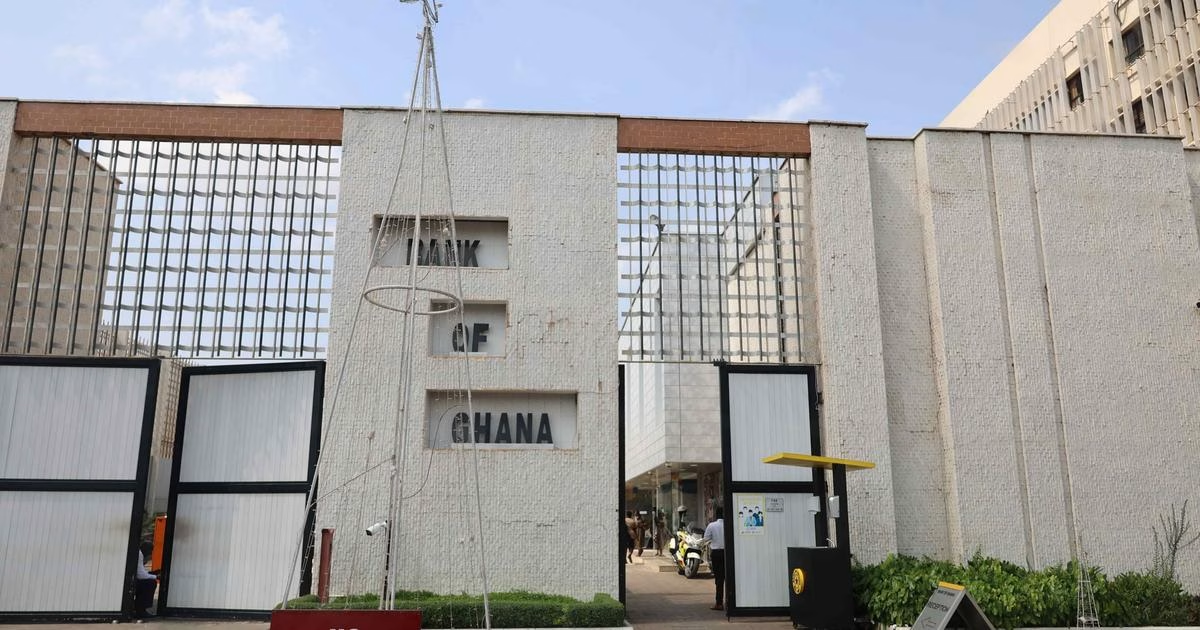
Director of Research at the Bank of Ghana (BoG), Dr. Philip Abradu-Otoo, has shed light on how the central bank determines its key policy rate, emphasizing that the process involves careful consideration of a wide range of economic indicators, not just inflation.
Speaking on Joy News’ PM Express Business Edition, Dr. Abradu-Otoo highlighted that decisions around the policy rate are more complex than often perceived and take into account various factors influencing consumer and business spending.
“The committee looks at the real sector of the economy—how businesses are performing, how consumers are coping, and whether current spending aligns with fiscal expectations,” he explained.
He noted that consumer spending levels are especially important, as they directly impact government revenue collection and overall economic activity.
Dr. Abradu-Otoo added that while the Bank of Ghana uses data from the Ghana Statistical Service, it also relies on its own models to assess real sector performance, including trends in imports, exports, and domestic business activity.
“We monitor the pace of economic activity, price movements, and inflation forecasts, and assess how close we are to our inflation target,” he said.
In addition to the real sector and inflation outlook, the health of the banking sector is also evaluated. “We ask whether banks are well-positioned to support economic growth, which is a core part of their role,” he added.
Finally, the central bank considers the overall risk environment to ensure its decisions are sustainable.
“We bring all these elements together into a comprehensive framework to decide whether adjustments to the policy rate can support stable and sustained economic growth,” Dr. Abradu-Otoo concluded.