The Bank of Ghana (BoG) has emphasised the importance of shared responsibility in the country’s ongoing economic reset, noting that lasting stability and renewed confidence cannot be achieved by any single institution acting alone.
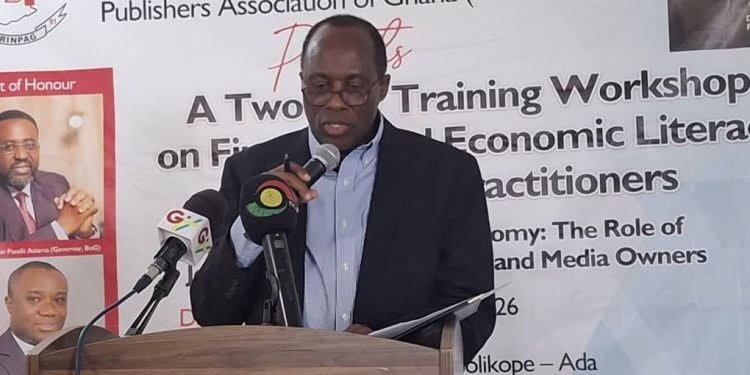
This was disclosed by the Governor of the Bank of Ghana, Dr. Johnson Asiama, in a speech delivered on his behalf by his advisor, Dr. Francis Yao Kumah, at a training workshop organised by the Private Newspapers and Online News Publishers Association of Ghana (PRINPAG) in Ada on Saturday, January 24, 2026.
Dr. Asiama explained that the Bank’s current policy direction places strong emphasis on credibility and public understanding, stressing that an informed citizenry must be able to interpret economic signals beyond short-term outcomes.
“Resetting the economy is not the responsibility of one institution,” he said. “The Bank of Ghana will remain measured and forward-looking, consolidate reforms in the foreign exchange and money markets, protect innovation in payments and digital finance, and transition key programmes into sustainable frameworks. Above all, we will communicate clearly and with respect for the media’s constitutional role.”
Executive Secretary of PRINPAG, George Wilson Kingson, described the engagement as a critical component of a broader roadmap aimed at equipping members with the knowledge required to contribute effectively to national development, especially at a time when economic reforms demand accurate and responsible reporting.
He noted that the workshop was intended to go beyond dialogue, expressing confidence that the skills and networks developed would lead to improved economic journalism, stronger media institutions, and a better-informed public. He also thanked the Bank of Ghana for its continued support and collaboration.
The two-day workshop equipped PRINPAG members with practical insights into Ghana’s macroeconomic framework, including monetary policy, fiscal reforms, debt management, and structural adjustments within the context of economic recovery.
The programme sought to simplify complex economic issues, enhance analytical reporting skills, promote responsible economic journalism, deepen media–policy engagement, and encourage reflection on the sustainability of media organisations in a post-debt restructuring environment.