- Ghanaian PhD students in the UK risk deportation over unpaid tuition fees
- Over 100 students petition Downing Street and Keir Starmer for intervention
- Some students reportedly deported, evicted, or relying on food banks
Ghanaian students studying at universities in the United Kingdom have warned that they face possible deportation after being left stranded by their own government due to unpaid scholarships and tuition fees.
A group representing more than 100 doctoral students has petitioned Downing Street and UK Labour leader Keir Starmer, seeking intervention to pressure the Ghanaian government to clear millions of pounds in outstanding tuition fees and living allowances.
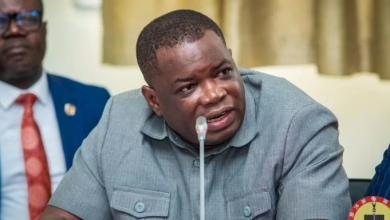
According to the group’s president, Prince Komla Bansah, several students have already been deported after universities withdrew their enrolment over non-payment, while others have been evicted from their accommodation or forced to rely on loans and personal debt to survive. He said many students are struggling to balance part-time work with the demands of PhD programmes and are accumulating significant debt.
A petition submitted to Downing Street describes the crisis as so severe that some students are facing legal action over unpaid rent, while others have had to depend on food banks due to a lack of funds.
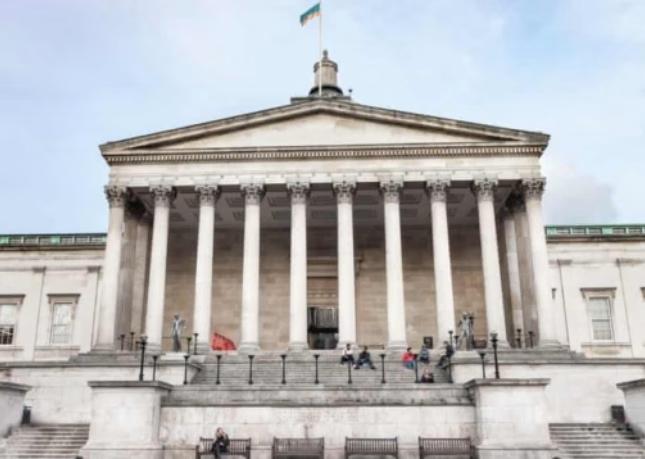
The affected students are enrolled at universities across the UK, including University College London, Robert Gordon University in Aberdeen, and the universities of Nottingham, Bradford, Warwick, Lincoln and Liverpool.
Ghanaian officials have acknowledged the problem. Authorities say that when President John Dramani Mahama’s administration took office in January, it inherited scholarship debts owed to about 110 UK institutions, estimated at £32 million.
Alex Kwaku Asafo-Agyei, Registrar of the Ghana Scholarship Secretariat, said an audit of scholarships awarded by the previous administration is ongoing, and that new UK scholarships have been temporarily suspended. He added that after assuming office in April, he travelled to the UK to negotiate instalment payment plans with some universities, though several institutions later withdrew from the agreements.
Asafo-Agyei said Ghana has made “significant payments” to its UK partner institutions and is working to resolve the matter amicably to prevent students from suffering. However, he declined to disclose how much of the debt has been settled so far.
About 30 Ghanaian PhD students said the secretariat has not paid their tuition fees since 2024, preventing some from graduating, submitting academic work or accessing university facilities. Others reported missing stipends for more than three years. The students also claim the government has failed to renew official letters of support required for their stay in the UK.
Bansah questioned why new foreign scholarships continue to be awarded despite unresolved payment issues affecting current students.
Similar scholarship funding challenges have affected students from other countries. In recent years, Nigerian, South African and other international students have faced protests, evictions and loss of course placements abroad due to delayed government scholarship payments.