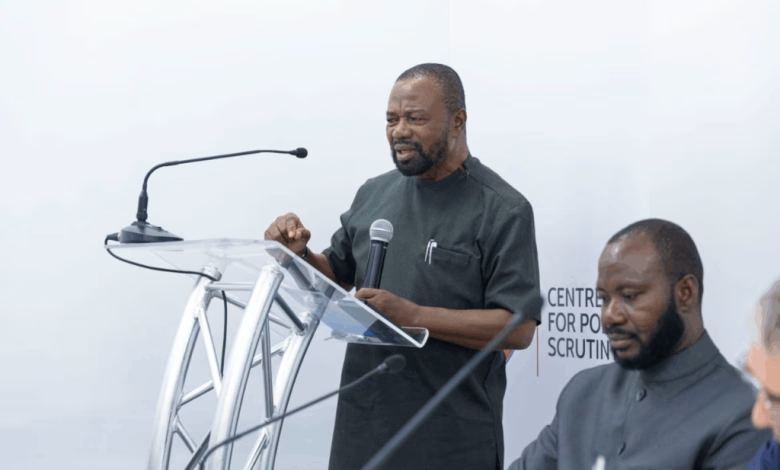
- Dr. Vladimir Antwi-Danso warns Ghana must reinforce security systems, intelligence, and community preparedness
- Terrorism in West Africa is increasingly ideological, economic, and social, not just violent
- Extremist groups exploit governance gaps, local conflicts, and youth vulnerabilities
Ghana must urgently reinforce its security architecture, improve intelligence coordination, and build stronger community resilience to counter the fast-spreading terrorist threats moving south from the Sahel, security and international relations analyst Dr. Vladimir Antwi-Danso has warned.
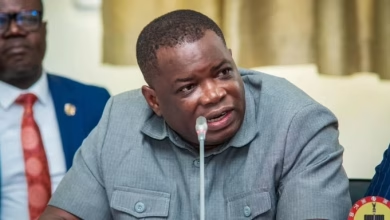
Speaking at a high-level conference in Accra on Tuesday, December 2, 2025, themed “Fighting Terrorism in the Middle East and Africa,” and organised by the Centre for Policy Scrutiny (CPS), Dr. Antwi-Danso delivered a sobering assessment of the continent’s shifting security landscape.
The event drew several prominent figures, including Israeli Ambassador to Ghana Roey Gilad, Ofoase-Ayirebi MP Kojo Oppong Nkrumah, Akim Oda MP Alexander Akwasi Acquah, and other notable personalities.
“Terrorism is no longer just guns and bombs. It has ideological, economic, and social roots,” he said.
He emphasised that Ghana’s survival depends on tighter intelligence coordination, better border surveillance, and grassroots sensitisation. He noted that insurgent groups in the Sahel now rely on decentralised networks, exploiting economic hardship, social friction, and local disputes to recruit young people—conditions that also exist in Ghana and demand early intervention.
Citing a 2024 UN report, he highlighted that 56% of global terrorism is now concentrated in the Sahara, with West Africa alone accounting for 70% of Africa’s recorded attacks between 2016 and 2024.
He traced the region’s instability to historical grievances, weak governance, and vast ungoverned territories, noting that Libya’s collapse in 2011 was a major catalyst that unleashed heavily armed fighters across the Sahara.
Using Mali as an example, he explained how unresolved local disputes opened the door for extremist infiltration, with communities later losing control to the militants they once sought help from.
Dr. Antwi-Danso further stressed that terrorism flourishes where citizens lack jobs, education, and basic services, making them susceptible to extremist ideologies.
He called for a comprehensive counterterrorism approach that blends security action with social, cultural, and ideological solutions.
“We must change mindsets. Without tackling the non-military aspects, we will continue to lose ground,” he cautioned.
He added that as extremists are pushed from the north, coastal states like Ghana must prepare for potential infiltration, warning that porous borders, cross-border ethnic connections, and existing local vulnerabilities provide easy entry points.
The conference ended with a shared agreement that Ghana must enhance intelligence-sharing, strengthen border management, and prioritise preventive measures to protect national stability—because with terrorism evolving so rapidly, early action is the country’s strongest defence.