
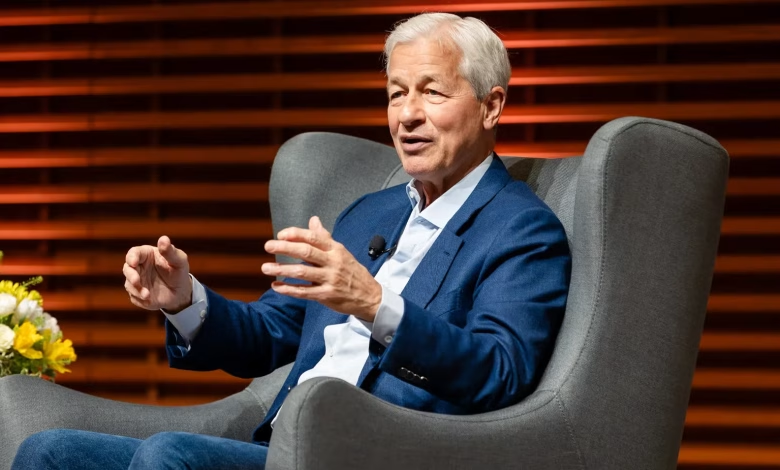
- US is becoming a “less reliable” global partner Dimon says
- Dimon emphasizes military investment, suggesting the need to "stockpile bullets, guns, and bombs"
- Highlights geopolitical risks, fiscal spending, and militarization as key sources of uncertainty
Jamie Dimon, the head of JPMorgan, has warned that the risk of a significant downturn in US stocks is greater than what the market currently reflects. Speaking to the BBC, Dimon expressed being “far more worried than others” about a major market correction, which he believes could occur within the next six months to two years.
In a rare and in-depth interview, Dimon also commented on the US’s evolving role on the global stage, describing the country as a “less reliable” partner. While he acknowledged ongoing concerns about inflation in the US, he maintained that the Federal Reserve would likely remain independent, despite repeated criticism from the Trump administration of its chair, Jerome Powell.
Dimon pointed to various sources of uncertainty, including geopolitical tensions, fiscal spending, and the global trend toward militarization. He warned that these factors create complex issues with no clear solutions. “All these things cause a lot of issues that we don’t know how to answer,” he said.
In his recent shareholder letter, Dimon also highlighted the growing risks to global security, noting that the US could run out of missiles in just seven days in the event of a South China Sea conflict. Reflecting on how to address these risks, he stressed the importance of military investment, saying, “People talk about stockpiling things like crypto; I always say we should be stockpiling bullets, guns, and bombs.” He added that the world had become more dangerous, and that prioritizing safety was key.
Dimon further cautioned that the level of uncertainty surrounding the global economy should be considered higher than most people realize. He also touched on the stock market’s recent growth, driven largely by AI investments. While acknowledging that AI technology is real and will ultimately deliver returns, he likened the situation to the dotcom boom of the late 1990s, predicting that “some of the money being invested in AI will probably be lost.”