- Abdul Aziz Mohammed says Chief Justice's removal followed constitutional procedures
- Government “not surprised” by the outcome, citing clear facts from the start
- Opposition claims of procedural breaches dismissed as unsubstantiated
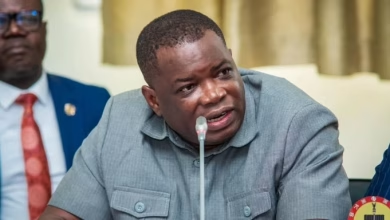
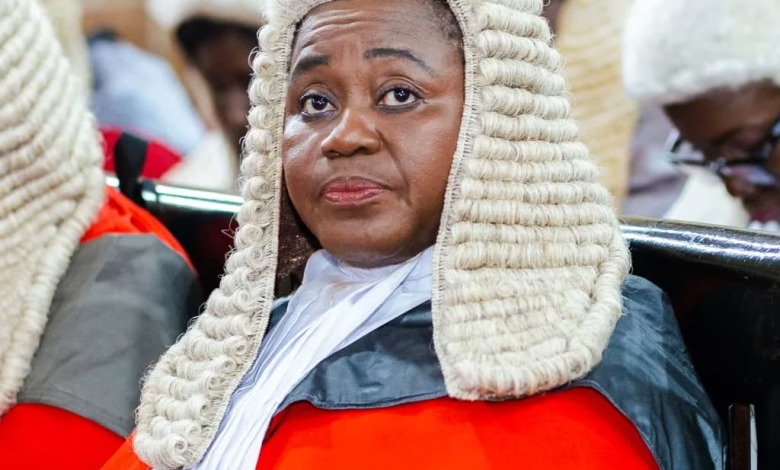
The Acting Deputy Chief Executive Officer of the Ghana Investment Fund for Electronic Communications (GIFEC), Abdul Aziz Mohammed, has justified the removal of Chief Justice Gertrude Araba Esaaba Sackey Torkornoo, stating that the process followed constitutional provisions and due process.
Speaking on Prime Morning on News Flash, Mr. Mohammed said the government had anticipated the development, noting that the facts surrounding the matter made the outcome foreseeable.
On the Removal of the Chief Justice
“I wasn’t surprised by the Chief Justice’s removal. From the start, the facts were clear,” he stated. “As a government, we were committed to due process and constitutional procedures. So this outcome didn’t catch us off guard.”
Responding to Opposition Concerns
Addressing criticism from the opposition, Mr. Mohammed refuted claims that the removal process was flawed. He argued that no concrete evidence had been presented to support allegations of procedural breaches.
“Our colleagues have raised concerns multiple times, but they haven’t identified any clear violation of the rules,” he said. “This isn’t surprising.”
On Constitutional Protections and Precedents
Mr. Mohammed emphasized that while the office of the Chief Justice is constitutionally protected, it remains subject to Article 146, which outlines the process for removal of certain officeholders.
“The Chief Justice is among several officials whose offices are constitutionally insulated, but not immune to removal. Under President Akufo-Addo, we saw the removal of the Electoral Commission Chair and a deputy. During President Mahama’s tenure, the CHRAJ Commissioner was removed. Even last year, there were petitions against this same Chief Justice. This isn’t unprecedented — it’s about following the law.”
On the Constitution’s Role
He stressed that the Constitution itself anticipates situations where a Chief Justice might be removed.
“If it were unconstitutional, there would be no provision for it. What matters most is adherence to due process.”
On Allegations of Political Motivation
Responding to claims that the opposition National Democratic Congress (NDC) had previously hinted at removing the Chief Justice if elected, Mr. Mohammed said no official position had been taken by the party.
“I’m not aware of any authorized NDC official stating an intention to remove the Chief Justice. Yes, there were concerns, but legitimate petitions were submitted by citizens, and the President acted within the law.”
Clarifying John Mahama’s Comments
He also addressed suggestions that former President and NDC flagbearer John Dramani Mahama had previously indicated a desire to remove the Chief Justice. According to Mr. Mohammed, Mahama’s remarks were part of a broader vision for systemic reform.
“When President Mahama spoke about resetting national institutions, it wasn’t focused solely on the judiciary.”
Comparing to EC Chair’s Removal
Mr. Mohammed noted that the precedent for removing constitutionally protected officers was set with the dismissal of the Electoral Commission Chair.
“If removing a constitutionally insulated officer like the EC Chair was acceptable under President Akufo-Addo, why should this be any different? The EC Chair’s role is arguably more critical — a mistake there can destabilize the entire country.”
On Future Political Responses
In closing, Mr. Mohammed acknowledged that future governments may follow a similar path if they believe it is in the national interest — provided they respect the law.
“Some have threatened to do the same when in power. That’s their right, as long as they follow due process. We won’t stand in their way, but constitutional procedures must be respected.”