- Putin and Zelensky both decline to attend Istanbul peace talks
- Russia sends senior officials; Ukraine’s participation hinges on Putin’s presence
- Talks aim for a 30-day ceasefire and potential prisoner exchange
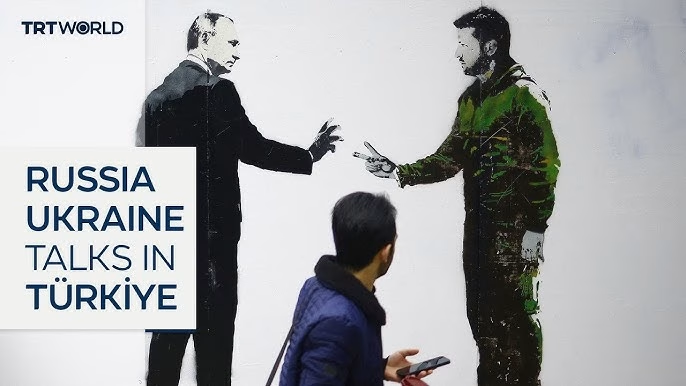
Neither Russian President Vladimir Putin nor Ukrainian President Volodymyr Zelensky will attend the first face-to-face Ukraine peace talks in over three years, casting doubt on the potential for significant progress.
Putin had proposed direct talks in Istanbul on May 15 without preconditions, but the Kremlin later confirmed he would not attend. Instead, a delegation led by presidential adviser Vladimir Medinsky and Deputy Defence Minister Alexander Fomin would represent Moscow.
Zelensky, who had challenged Putin to show up “if he’s not afraid,” reportedly agreed to participate only if the Russian leader attended. In his Wednesday night address, Zelensky stated Ukraine’s final decision on the talks would depend on clarity over Putin’s presence.
Former U.S. President Donald Trump, who had initially expressed interest in attending, also declined. A U.S. official cited Trump’s ongoing Middle East tour as the reason. The U.S. delegation in Turkey will be led by Secretary of State Marco Rubio, alongside senior envoys Steve Witkoff and Keith Kellogg.
Zelensky and Trump both support a temporary 30-day ceasefire, but Putin insists that talks must precede any agreement. Trump, frustrated with both sides, is reportedly considering secondary sanctions against Moscow for obstructing peace efforts.
Russian lawmaker sources suggest a prisoner of war exchange may also be on the table during the talks.
The last direct negotiations between Russia and Ukraine took place in Istanbul in March 2022, shortly after Russia launched its invasion. While Putin claims the offensive is a “special military operation” to eliminate neo-Nazi threats, Ukraine and its allies denounce it as an unprovoked invasion and land grab.
Putin has made few concessions since then. His recent proposal referenced the failed 2022 draft peace deal, which included Ukrainian neutrality in exchange for international security guarantees. However, Kyiv maintains that neutrality is a non-negotiable red line.
With Russian forces occupying roughly 20% of Ukraine and no top-level leadership attending the talks, hopes for a meaningful peace breakthrough remain slim.